

Most agents don’t have a marketing problem. They have a consistency problem. The real estate marketing ideas generating real enquiries in 2026 are not new, but the agents acting on them systematically are pulling ahead. This guide covers 12 specific strategies, from local SEO and short-form video to branded promotional products and direct mail, with a practical tip in every section so you can act on each one straight away.
Why Your Marketing Strategy Matters
Most real estate business comes from people who already trust you.
Verified research consistently shows that the majority of buyers and sellers choose their agent through a referral or a previous relationship. That’s not a reason to stop marketing. It’s the reason to start thinking about marketing differently.
The question every marketing decision should answer is: will this make my client confident enough to recommend me?
Referrals don’t just happen because you’re likeable. They happen because you delivered a professional, well-managed experience and the traditional marketing strategies you ran on that listing reflected it.
You can follow these expert strategies to get better results.
1. Build Your Digital Foundation Before You Scale Any Channel
Every other tactic on this list performs better when your digital foundation is solid. That means three things:
- A fast, mobile-friendly website
- A fully completed Google Business Profile
- A segmented email database you can actually send to.
We see agents skip this and go straight to paid ads or social media, then wonder why their cost per lead is high. The foundation is what converts the traffic every other channel sends.
| Quick Tip: Audit your Google Business Profile this week. Confirm your address, service areas, opening hours, and photos are current. Incomplete profiles rank lower and signal to prospects that your business isn’t active. It takes 20 minutes and affects every search that includes your suburb name. |
2. Create Suburb-Specific Content That Ranks in Local Search
Local SEO is one of the highest-return marketing investments for real estate agents because the traffic it generates is already looking for what you do.
A suburb guide covering local schools, transport, lifestyle, and recent price trends can rank for location-based searches for years. It positions you as the local expert before a prospect has made any contact.
The agents we see ranking on page one for suburb-level searches aren’t running complex campaigns. They’ve published genuinely useful, location-specific content consistently and kept their technical SEO basics in order: fast site, mobile-optimised, no broken links.

3. Use Short-Form Video to Build Name Recognition Faster Than Any Ad
Short-form video is now the fastest way to build local name recognition without paid spend, and most agents still aren’t using it consistently.
A 60-second video shot on location in a suburb you’re farming, sharing a recent sale result and what it means for local values, will outperform a branded graphic every week. Buyers and sellers follow agents who demonstrate they know the area, not agents who post motivational quotes.
4. Run Email Campaigns Your Contacts Actually Open
Your email list is the one audience you actually own. Social media followers can disappear with an algorithm change. Your list stays.
The agents getting strong results from email share three habits:
- They send consistently, monthly or bi-monthly, not when they remember to.
- They segment their list so buyers get different content than sellers.
- Every email has one clear call to action, not five.
Monthly market updates with real local data perform exceptionally well. Past clients forward them to friends who are thinking about selling. Prospects save them. And they position you as the agent who knows the numbers.
5. Make Paid Advertising Work With Dedicated Landing Pages
Paid ads for real estate work. But most agents are sending paid traffic to their homepage and wondering why their cost per lead is high.
Every paid campaign needs its own landing page: one headline, one image or video, one form, one call to action. No navigation menu. No distraction. Just a clear reason to make contact.
| Our Tip: Before running your next Facebook or Google campaign, build a simple landing page for it. Use a free tool like Carrd or your existing website builder. Headline: the specific offer (free appraisal, suburb market report, open home details). Form: name, email, phone. Nothing else. Test it against your current homepage and compare lead volume. |
6. Rethink the Open Home: Make It Work Before and After the Day
Open homes are still valuable, but the inspection itself is no longer the most important part of the strategy.
Research shows buyers do the majority of their property research before ever stepping through the door. The agents winning more qualified attendees at open homes are the ones who have given buyers enough digital content beforehand, virtual walkthroughs, video previews, floor plans, and detailed listing descriptions, that only genuinely interested buyers show up.

7. Use Branded Promotional Products That Travel Far Beyond the Inspection
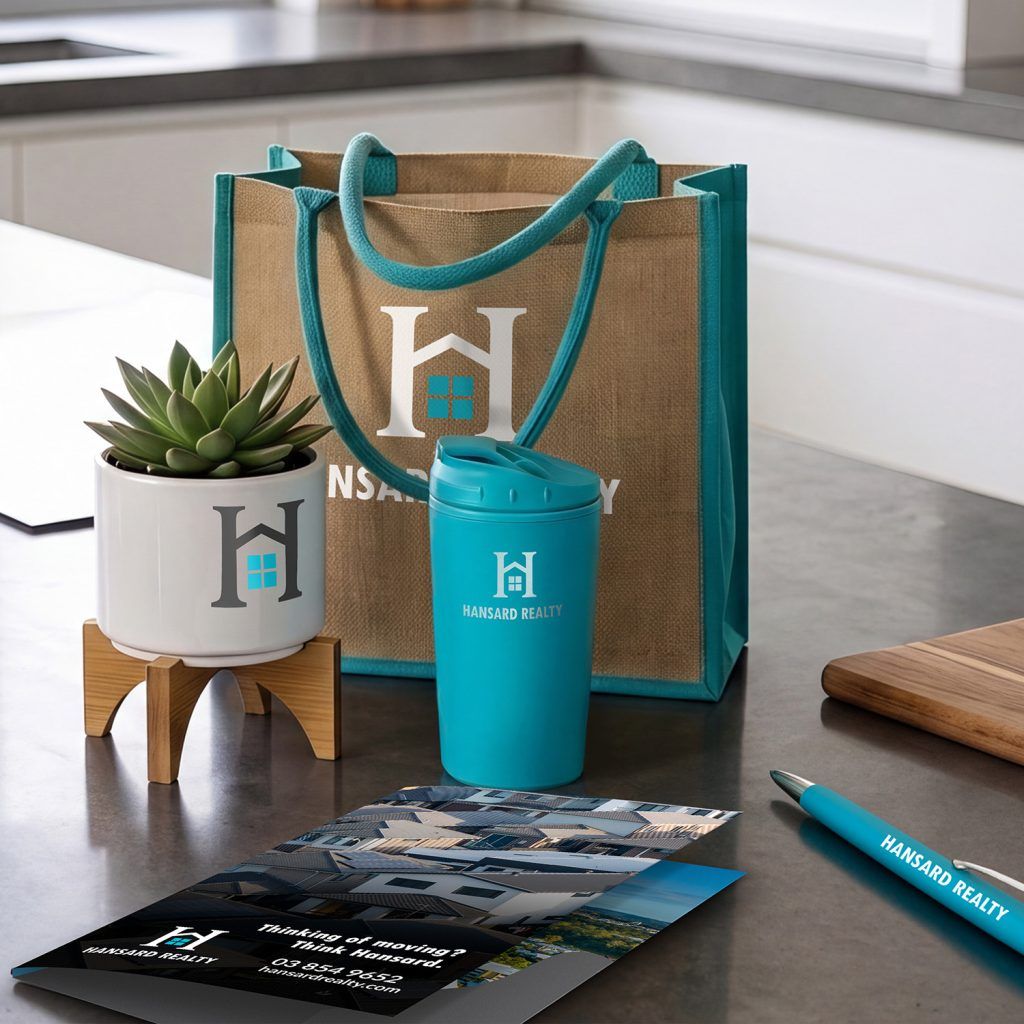
Branded promotional products have delivered consistent returns for real estate agents for decades because the logic is simple: a well-chosen item keeps your name visible in someone’s home or office long after your digital ad has scrolled past.
The agents using promotional merchandise most effectively in 2026 aren’t handing out random branded items. They run a two-tier strategy: a practical, lower-cost item for high-volume distribution, and a premium item for relationships that matter.
- High-volume tier (open homes, community events, letterbox drops): Branded pens, confectionery, tote bags, and calico bags. Low cost per unit, high distribution reach, and your branding travels well beyond the inspection day.
- Premium tier (past clients, referral partners, settlement gifts): Branded drink bottles, notebooks, umbrellas, and reusable cups. Higher cost per unit, but the recall and relationship signal is in a different league.
The items generating the strongest recall for the real estate clients are consistently the ones people use daily in visible settings. A branded drink bottle at the gym, a tote bag at the market, a notebook on a client’s desk. Your name is there every time.
Specific items that work well for real estate:
- Custom branded drinkware: Reusable cups and drink bottles get used daily in social settings. Your logo travels to the office, the school run, and weekend activities. Explore branded drinkware for your next campaign.
- Custom tote bags: A natural fit for open homes. Practical, reusable, and your branding goes wherever the bag goes. Browse tote and calico bags in bulk quantities.
- Promotional Notebooks: Leave a quality branded notebook after an appraisal meeting. It sits on a seller’s desk every day until they decide who to list with.
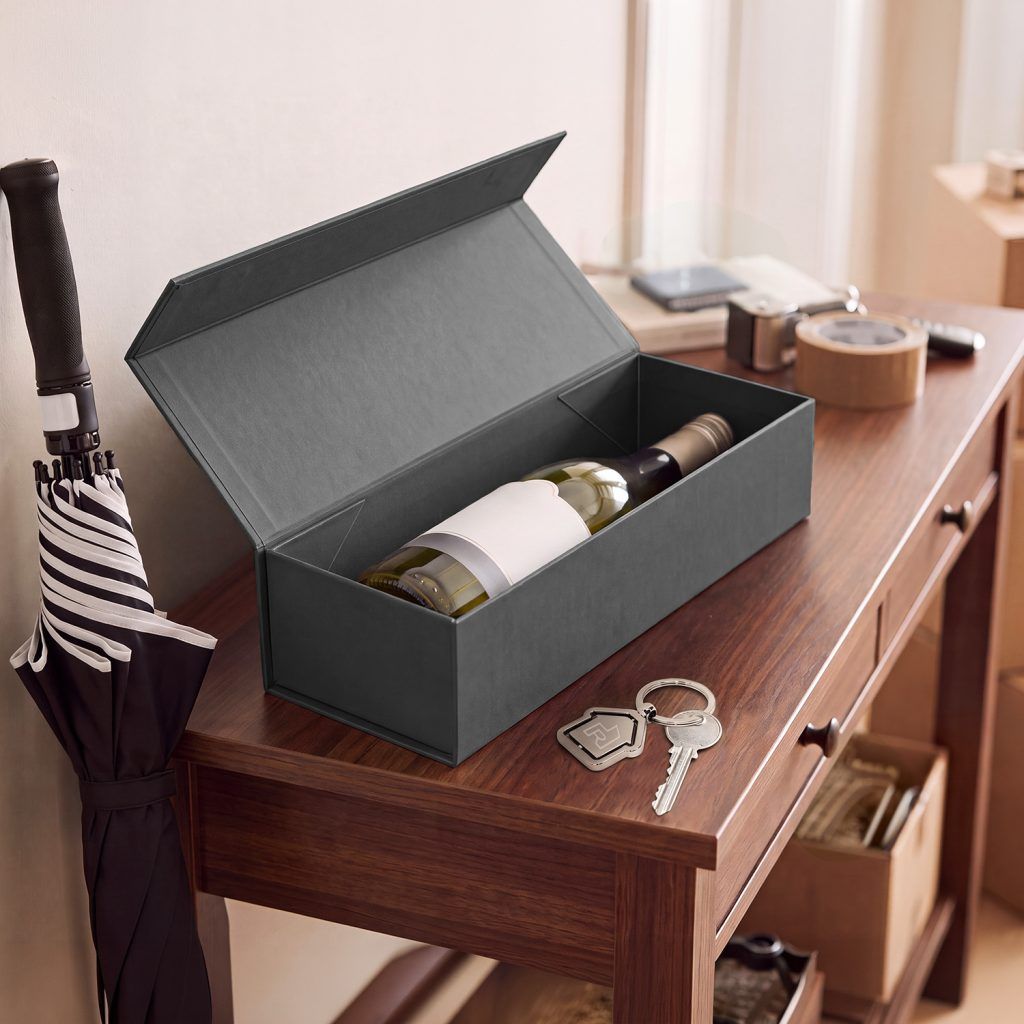
- Custom branded keyrings: A natural match for real estate, handed over with property keys or included in a settlement gift pack.
- Custom Magnetic Calendars: To keep your brand and contact info visible throughout the year.
8. Build a Referral System With a Real Follow-Through
Referrals convert at a higher rate than any other lead source because trust transfers with the introduction. A prospect who arrives via a referral from a past client is already predisposed to work with you. The process is simple:
- The ask: A post-settlement email with a specific, easy request. Something like: “If you know anyone thinking about selling in [suburb], we’d love to be introduced.” Timed right, most happy clients are genuinely willing.
- The acknowledgement: A handwritten note or a quality branded gift when a referral comes in. Not a text message. The gesture signals that you treat the relationship as more than transactional.
- Professional referral partners: Mortgage brokers, conveyancers, financial planners, and building inspectors all interact with buyers and sellers at moments of high intent. A maintained relationship with these professionals generates consistent new enquiry without ad spend.
A branded gift sent to a referral partner who sent you a listing doesn’t need to be expensive. A quality notebook, a branded drink bottle, or a confectionery hamper costs far less than a single paid lead and creates a reason for them to send the next one.
9. Show Up in Your Community With Genuine Presence, Not Just Signage
Community sponsorships and local presence build the kind of familiarity that advertising cannot manufacture. People do business with agents they recognise, and they recognise agents who show up consistently in the places they care about.
The most effective community presence we see from real estate clients combines a regular sponsorship (a local sporting club, school event, or community market) with branded merchandise that extends the visibility beyond the event itself.
10. Use Direct Mail in Markets Where Every Agent Has Gone Fully Digital
Most agents pulled back from letterbox drops when digital advertising took over. That’s created a real opportunity for agents willing to use it.
Physical mail achieves open rates that email campaigns rarely match, because a well-designed piece in a letterbox has almost zero competition. In suburbs where every agent is running Facebook ads, the one landing in the letterbox stands out.
- Lead with a specific local data point: A real recent sale result from the street or suburb, not a generic market commentary.
- Give them one action to take: Book an appraisal, scan a QR code, or visit a landing page. Not three options.
- Repeat across consecutive months: Three or four drops across the same area build recognition. A single drop rarely moves the needle.
11. Find Your Niche Before You Scale Your Marketing
The agents scaling most effectively in 2026 are not trying to be everything to everyone. They own a specific niche, a property type, a buyer demographic, a suburb cluster, or an industry sector, and they build all their marketing around it.
A niche makes every marketing decision easier. Your suburb guide is more specific. Your social media content is more relevant. Your referral partners know exactly who to send to you. And prospects who find you feel like they’ve found the right person, not just a person.
- Property type: Apartments, acreage, prestige, new builds, investment properties.
- Buyer demographic: First-home buyers, upsizers, downsizers, interstate relocators, foreign investors.
- Geographic niche: Owning two or three specific suburbs rather than spreading across a wide area.

12. Track What’s Working Before You Spend Another Dollar
Most agents have no idea which marketing channel is generating their enquiries. They’re running social media, sending emails, doing letterbox drops, and attending networking events, but they can’t tell you which ones are producing leads and which are producing nothing.
Without that data, you can’t cut what isn’t working or double down on what is. You’re just spending consistently and hoping the mix is right.
- Track enquiry source: Ask every new enquiry how they heard about you. Add it to your CRM. Review it monthly.
- Track appraisal-to-listing conversion: Are you converting appraisals at a consistent rate? If not, is it a follow-up problem or a presentation problem?
- Track cost per lead by channel: Divide total spend on each channel by the number of leads it generated. Compare channels on the same basis.
How to Create Real Estate Marketing Plan that Actually Works
The best real estate marketing plan is the one you execute consistently, not the most sophisticated one.
Build it in three layers so your marketing runs even when your pipeline is full:
- Always-on foundation: Website, Google Business Profile, email list, and a monthly market update. Set it up once, maintain it monthly.
- Campaign activity: Open home campaigns, new listing pushes, and seasonal market reports. Planned quarterly, not triggered by a quiet week.
- Relationship touchpoints: Referral follow-through, past client check-ins, branded gifts, and community presence. These keep you visible between transactions.
Pick two or three tactics from this list, not twelve. Do them consistently for 90 days before adding anything new. Review your lead sources at the end of each quarter. Cut what isn’t generating enquiries. Double down on what is.
To get your promotional products ordered before your next open home or community event, contact Payless Promotions for a quote. We work with real estate agencies across Australia on everything from open home giveaways to premium settlement gift packs.
Frequently Asked Questions
What branded items work best at open homes?
Pens, confectionery, and tote bags are the highest-distribution items for open homes. They’re low cost at volume, practical, and your branding travels with the recipient long after inspection day.
How often should I send a real estate email newsletter?
Monthly or bi-monthly outperforms weekly for most real estate audiences. A well-timed monthly email with real local data gets opened and forwarded. Weekly sends get unsubscribed.
Do virtual tours help win listings, not just sell them?
Yes. A library of professional virtual tours in your listing pitch signals to prospective sellers that your agency invests in presentation quality. Vendors notice the difference between agents who show up with a flyer and those who show up with a track record of professional marketing.
What’s the fastest way to build name recognition in a new suburb?
Three or four consecutive monthly letterbox drops across your target area, combined with weekly social media content specific to that suburb. Add a community sponsorship if there’s a local club or school event. Paid ads can accelerate this, but the organic tactics build stickier recognition.
How do I know which marketing channels are actually working?
Track three numbers: enquiry volume by source, appraisal-to-listing conversion rate, and cost per lead by channel. Most agents track none of these, which means they can’t cut what isn’t working or double down on what is.
