
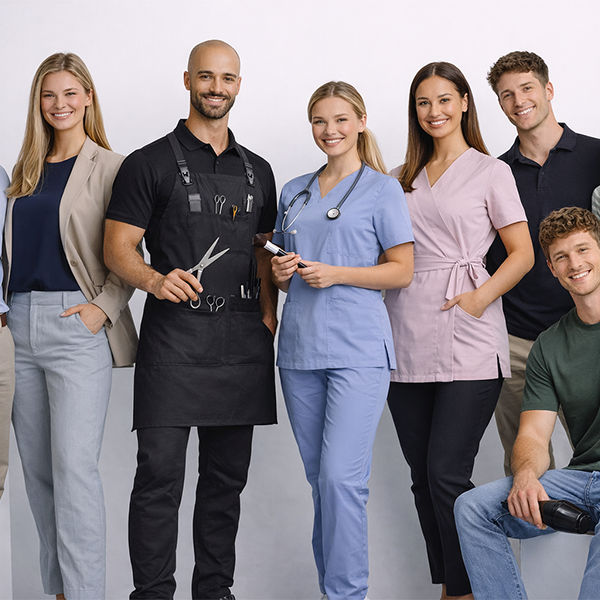
Selecting the right type of work uniforms has real consequences for your organisation. The wrong choice means wasted procurement budget, staff discomfort, and a brand presentation that falls short. A fabric that cannot handle daily commercial washing, a decoration method that fades within months, or a style mismatched to your industry all create problems that are expensive to fix after the fact.
Work uniforms across Australian industries span a wide range of environments and functional requirements. The main types include corporate uniforms, hospitality uniforms, industrial and construction workwear, healthcare and medical uniforms, nursing and dental uniforms, school uniforms, sports uniforms, beauty and hair dressing uniforms, business casual workwear, and retail uniforms. Most organisations need more than one of these categories across their different staff roles.

This guide explains each uniform type, what it includes, and the key factors to consider when sourcing for your team. It also covers the decoration methods used to apply custom branding to workwear, so you can brief your supplier with confidence.
Corporate Uniforms and Office Workwear
Branded corporate uniforms are formal or semi-formal garments worn by staff in professional, client-facing, and office-based roles. They typically include dress shirts, blazers, work pants, blouses, and tailored skirts, coordinated across a consistent colour palette that reflects the organisation’s brand identity.
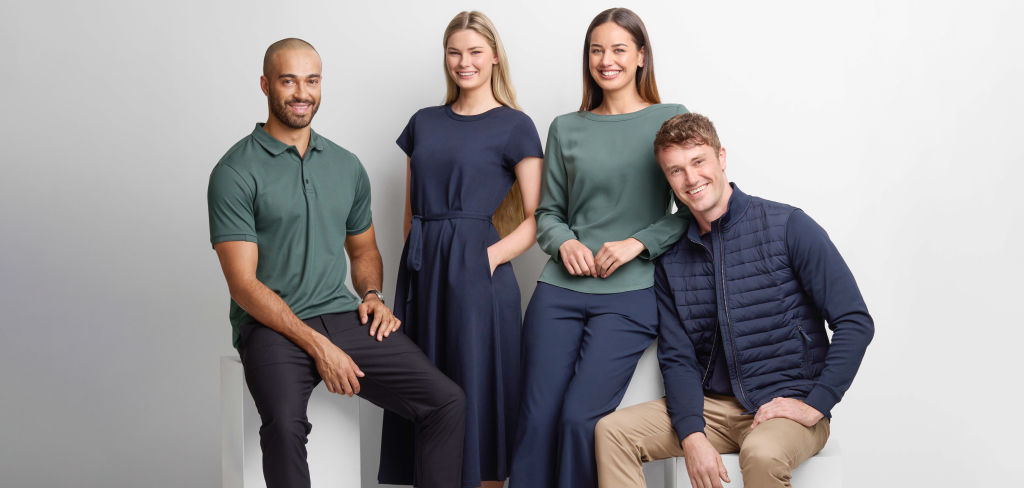
Corporate attire is common in financial services, legal firms, real estate, consulting, and government office roles where professional image and consistent presentation carry commercial weight. Brand guidelines, logo placement, and garment specifications should be clearly defined before an order is placed.
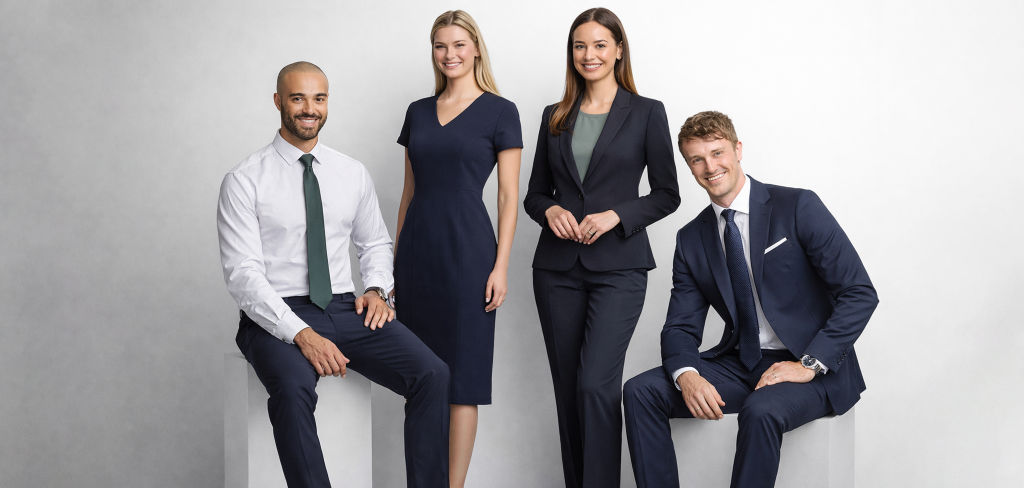
Embroidery is the standard decoration method for corporate workwear. It produces a premium, long-lasting finish that holds up through regular laundering. When ordering in bulk, confirm that the full size range is available across all garment types before committing to production.
Hospitality Uniforms
Hospitality uniforms must perform in demanding conditions: heat, movement, spills, long shifts, and constant public visibility. The balance between professionalism and comfort is more critical here than in most other work environments.
A typical hospitality uniform program includes branded polo shirts or dress shirts for front of house staff, aprons for food service roles, and practical attire for kitchen and support positions. Cotton and polycotton blends are preferred for breathability. Colourfastness is equally important because hospitality uniforms go through frequent washing, and colours that fade quickly undermine brand image.
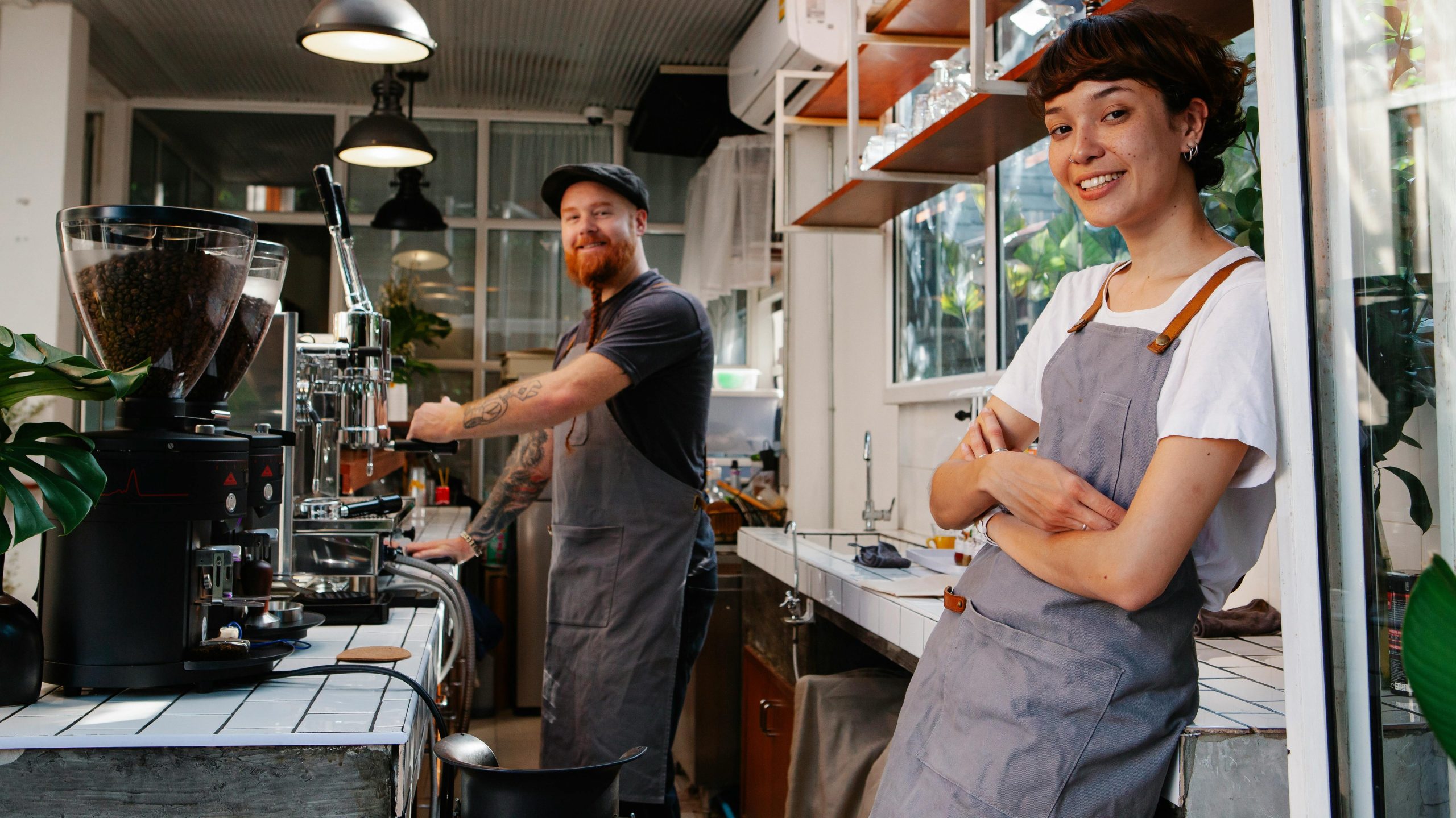
Front of house and back of house roles generally require different garment specifications. Many operators source these separately and apply consistent branding across both ranges. Embroidery suits front of house presentation; screen printing is a cost-effective option for larger back of house teams with simpler logo requirements.
Industrial, Construction, and Trades Uniforms
Industrial and construction workwear must protect the wearer, meet relevant safety standards, and hold up through physically demanding daily use. These requirements set it apart from every other uniform category.
Construction uniforms typically include hi-vis vests and shirts, reinforced work pants, long-sleeve cotton work shirts, and safety jackets. Fabric selection is driven by the work environment: breathable cotton for outdoor conditions in the Australian heat, treated blends for environments with chemical or flame exposure. Buyers sourcing workwear for site-based roles should confirm compliance requirements with their safety officer before ordering.
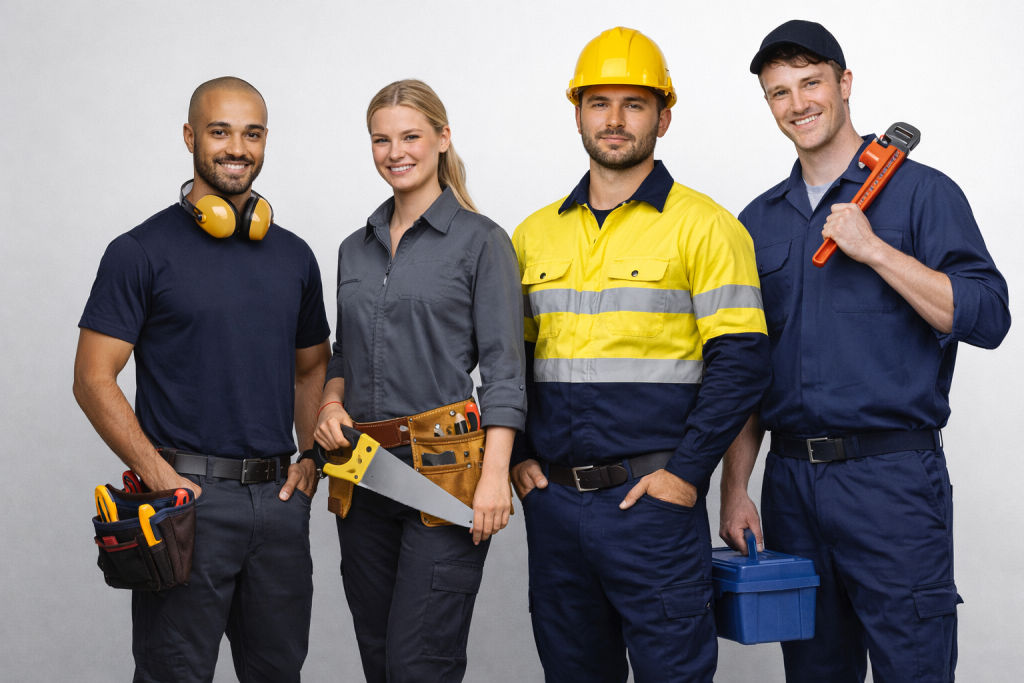
Automotive technicians require durable work pants and shirts that resist oil and abrasion. Warehouse staff need comfortable, practical attire suited to physical activity across long shifts. Screen printing and heat transfer are the most common decoration methods for industrial workwear, with company logos and site identification applied clearly to hi-vis garments and work shirts.
Healthcare, Nursing, and Dental Uniforms
Healthcare uniforms have specific requirements that distinguish them from all other work uniform types. Hygiene, ease of movement, and resistance to frequent high-temperature washing are non-negotiable in any clinical setting.
Nursing uniforms typically consist of scrubs in colour-coded configurations that identify roles and seniority at a glance. The colour coding system varies by facility but serves a practical function: staff, patients, and visitors can quickly identify who is who in a busy clinical environment. Fabrics are selected for smooth-weave properties that resist bacterial retention and withstand repeated laundering without losing colour or shape.

Dental uniforms follow similar principles. Dentists, dental assistants, and dental hygienists typically wear clinical tunics or scrubs that allow unrestricted movement during procedures, resist staining, and can be laundered at high temperatures. Lab coats are standard in pathology, pharmacy, and laboratory settings.
Decoration on healthcare and dental uniforms is minimal by design, usually a small embroidered logo or staff name on the breast pocket. Some clinical environments restrict decoration for infection control reasons. Organisations sourcing uniforms for public health or aged care facilities should confirm procurement compliance requirements before placing a bulk order.
School Uniforms
Branded school uniforms serve a distinct function compared to other work uniform types: they establish a consistent, identifiable identity for students and staff alike, while accommodating a wide range of sizes, ages, and physical activity levels throughout the school day.
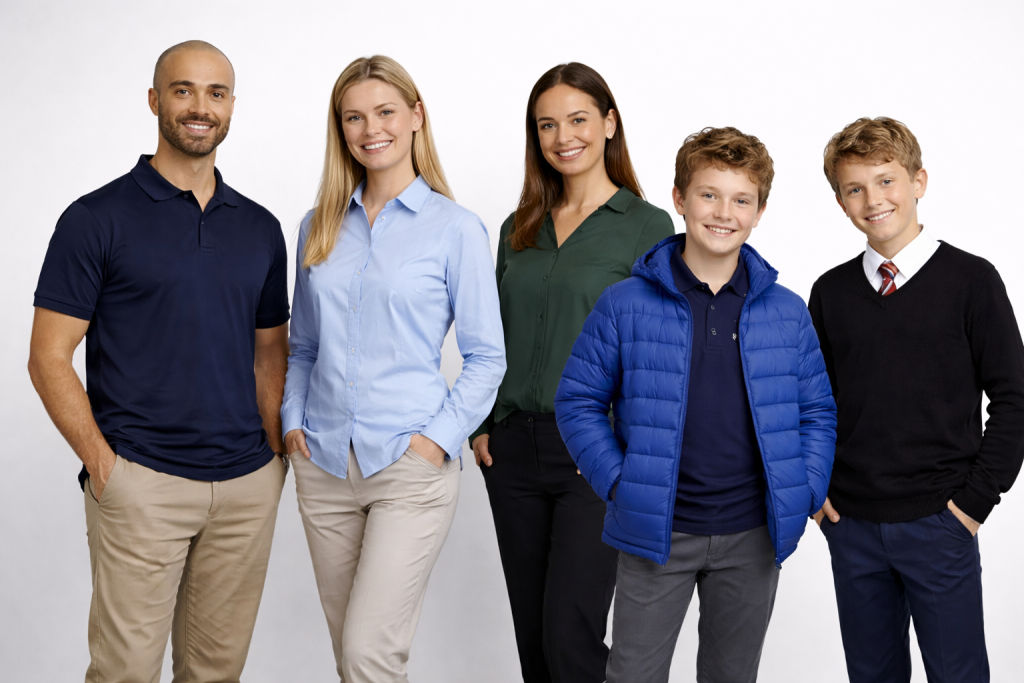
A standard school uniform program typically includes polo shirts, formal shirts or blouses, trousers, skirts, sports shorts, and outerwear such as jackets and jumpers. Schools sourcing staff uniforms separately often opt for a coordinated garment range that aligns with the student uniform palette, reinforcing the school’s brand identity across the entire community.
Durability and washability are the primary performance requirements for school garments. Polycotton blends are widely used because they balance comfort, breathability, and resistance to the kind of wear that school environments produce. Embroidery is the preferred decoration method for school crests and logos, as it holds its appearance through hundreds of wash cycles over the course of a school year.
Sports and Activewear Uniforms
Custom sports uniforms have different performance requirements to any other category of workwear. They need to support physical movement, manage moisture and heat, and hold their shape and colour through regular washing across an entire sports season.
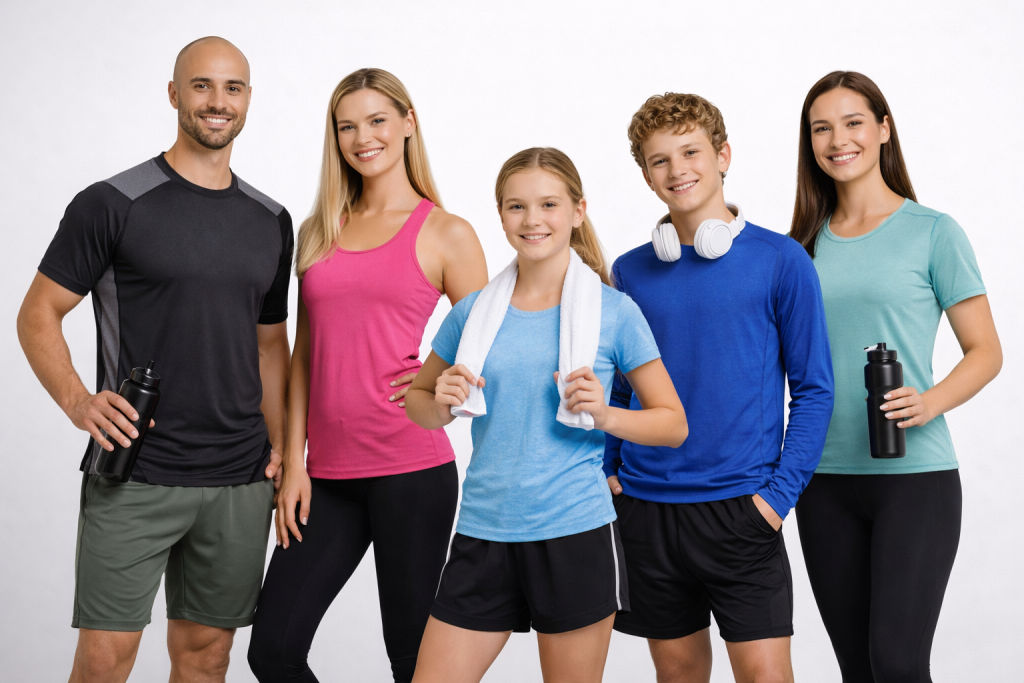
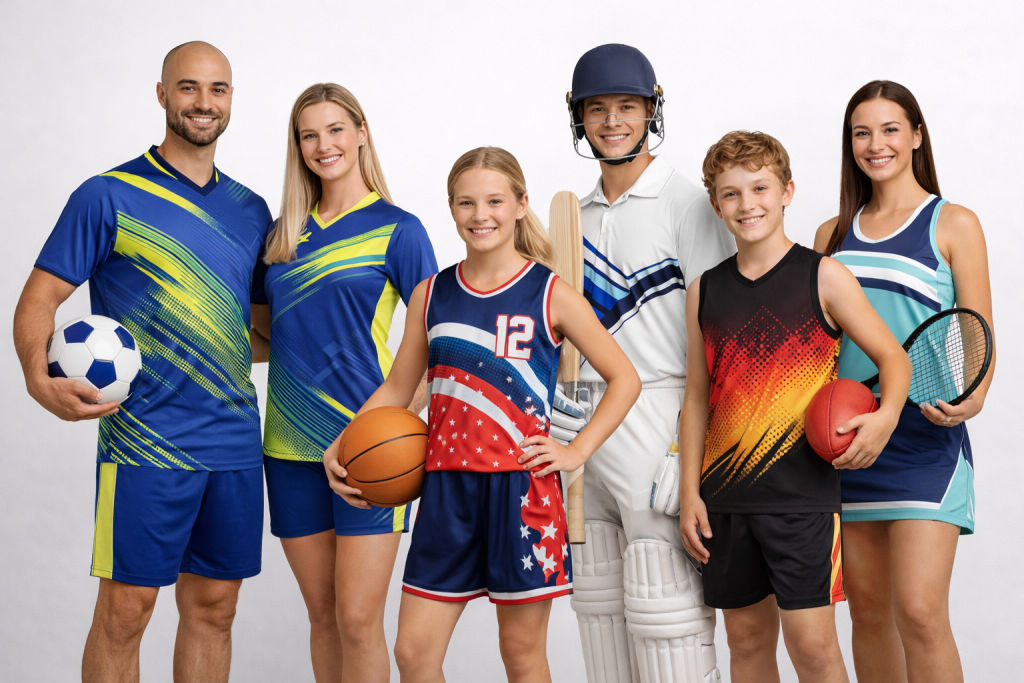
Sports uniforms are used by sporting clubs, school sports programs, corporate fitness teams, and gym and fitness businesses. Garments typically include jerseys, shorts, training tops, track pants, and warm-up jackets. Polyester and polyester-blend fabrics are standard because they are lightweight, moisture-wicking, and compatible with sublimation printing.
Sublimation is the preferred decoration method for sports uniforms. Because the dye bonds permanently into the polyester fibre, sublimated designs cannot crack, peel, or fade regardless of how frequently the garment is washed. Full-colour, all-over designs are achievable with sublimation, which makes it well suited to clubs and teams with distinctive uniform aesthetics. Minimum order quantities for sublimated sports uniforms typically start from 20 units.
Beauty and Hair Dressing Uniforms
Beauty and hair dressing uniforms occupy a unique position in the workwear category. They need to be practical and protective while also reflecting the aesthetic standards of the business. A salon or beauty clinic is a brand environment, and the uniform is part of the client experience.
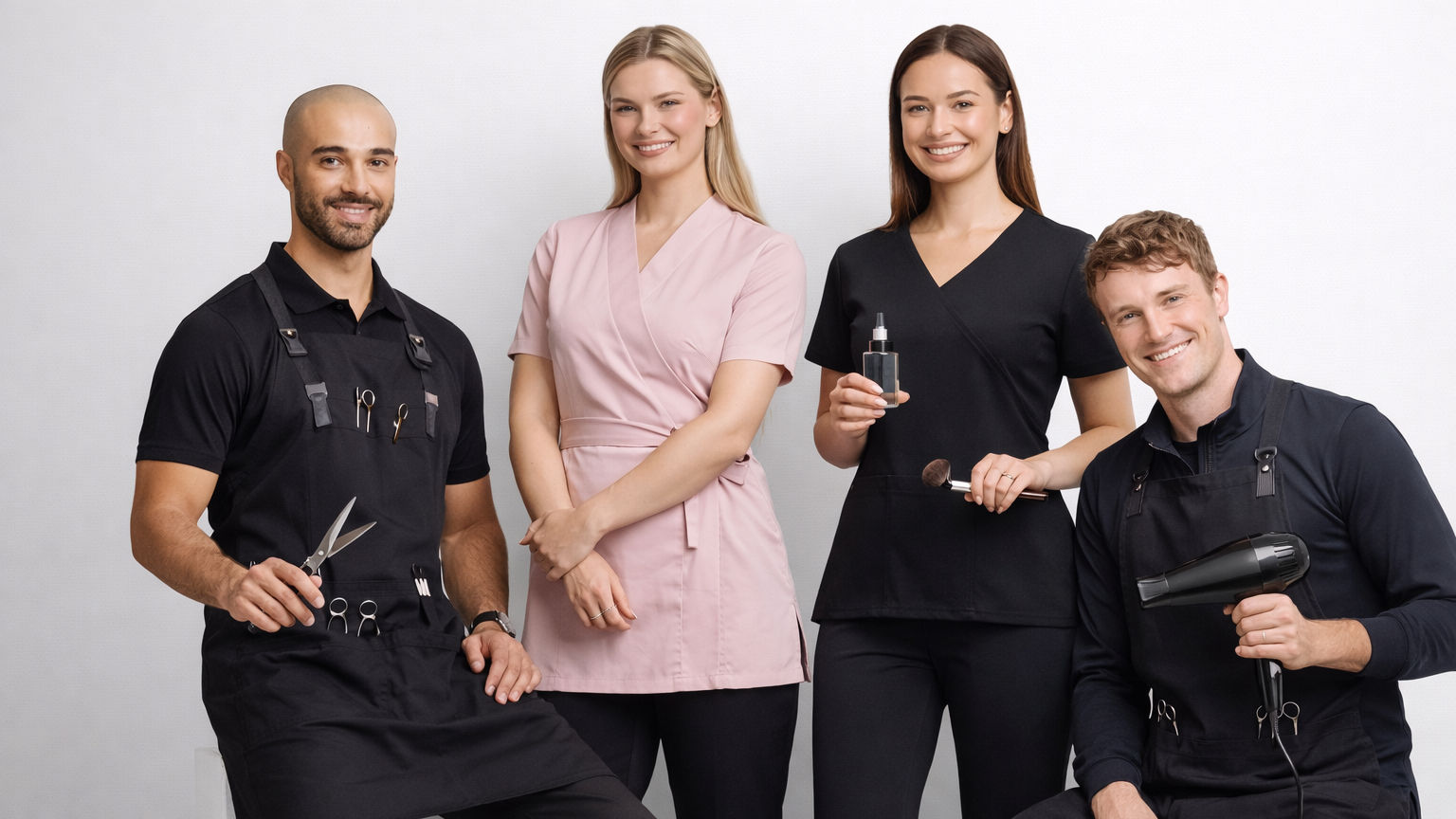
Beauty uniforms typically include branded tunics, wrap-style tops, and tailored trousers in a palette aligned with the salon’s interior and branding. Hair dressing uniforms often feature aprons as the primary branded garment, layered over comfortable base clothing. Fabrics are chosen for ease of movement, resistance to chemical exposure from hair and beauty products, and ease of laundering.
Embroidery is the most common decoration method for beauty and hair dressing uniforms because it produces a refined, professional finish on tunics and aprons without the rigidity of screen-printed designs. A small, well-placed logo on the chest or apron bib is the standard approach. For salons ordering in smaller quantities, heat transfer printing can be a cost-effective alternative.
Business Casual and Retail Workwear
Branded uniforms occupy the space between formal corporate attire and casual clothing. They are increasingly common among Australian businesses in tech, education, professional services, and retail management where a polished appearance matters but formal suiting is not practical.
Branded polo shirts are the most widely used business casual uniform garment in Australia. Combined with chino-style trousers and clean footwear, they produce a consistent professional look that works across office, client-facing, and off-site settings. Embroidery is standard for polo shirts, producing a durable finish that maintains brand consistency across a large team.

Retail uniforms have their own requirements. Floor staff need easily identifiable garments that help customers find them quickly. Retail environments often involve physical activity, so comfort and durability matter alongside appearance. A typical retail uniform includes branded polo shirts or t-shirts, sometimes paired with an apron or lanyard. Different roles within the same retail environment often wear different styles: floor staff, managers, and stockroom teams may each have their own garment specifications.
Uniform Decoration Methods for Custom Workwear
The decoration method determines how your logo or branding is applied to the garment. It affects cost per unit, colour accuracy, durability, and lead time. The five main methods used for custom uniforms in Australia are embroidery, screen printing, heat transfer, direct-to-garment printing, and sublimation.
- Embroidery
Embroidery stitches your logo directly into the fabric using coloured thread. It produces a premium, raised finish that holds its appearance through 50 or more commercial wash cycles, making it the standard choice for corporate, nursing, dental, and business casual uniforms. It works best with bold, relatively simple logos. A one-off digitising fee applies before production, and minimum orders typically start from 6 to 12 units. - Screen Printing
Screen printing pushes ink through a mesh stencil directly onto the garment surface, producing flat, vibrant colour. Setup costs are fixed per colour, so per-unit cost drops sharply at higher quantities. Screen printing becomes cost-effective from around 20 to 50 units and is well suited to hi-vis workwear, t-shirts, and large-volume retail or hospitality uniform orders. It works best with logos of 1 to 4 colours. - Heat Transfer
Heat transfer bonds a pre-printed design onto the garment using heat and pressure. It supports full-colour designs with low minimum order quantities, sometimes viable from as few as 5 units. It is best suited to beauty salon aprons, event merchandise, or occasional-wear garments rather than uniforms that go through daily industrial washing. We have many types of ‘Transfers’ available; Direct to Film, Colourflex, DigiFlex, SupaColour, SupaFlex, SupaDTF – suitable depending on what you are ordering. - Sublimation Printing
Sublimation converts dye into a gas under heat and pressure, bonding it permanently into polyester fibres so the design cannot crack, peel, or fade. It supports all-over, full-colour printing and is the preferred method for sports uniforms and activewear. It works only on polyester or polyester-blend fabrics with a light base colour, and minimum orders typically start from 20 units.
Work Uniform Types at a Glance
| Uniform Type | Typical Garments | Key Industries | Best Decoration | Key Requirement |
|---|---|---|---|---|
| Corporate | Dress shirts, blazers, trousers | Finance, law, government | Embroidery | Brand consistency |
| Hospitality | Polo shirts, aprons, dress shirts | Restaurants, hotels, events | Embroidery, screen print | Breathability, colourfastness |
| Industrial / Construction | Hi-vis, work pants, safety shirts | Construction, mining, automotive | Screen print, heat transfer | Safety compliance, durability |
| Nursing and Healthcare | Scrubs, lab coats, tunics | Hospitals, clinics, aged care | Minimal embroidery | Hygiene, high-wash resistance |
| Dental | Clinical tunics, scrubs | Dental clinics, pathology | Minimal embroidery | Ease of movement, stain resistance |
| School | Polo shirts, formal shirts, outerwear | Primary and secondary schools | Embroidery | Durability, washability |
| Sports | Jerseys, shorts, training tops | Sporting clubs, gyms, schools | Sublimation | Moisture management, colour retention |
| Beauty and Hair | Tunics, aprons, wrap tops | Salons, beauty clinics, spas | Embroidery, heat transfer | Chemical resistance, brand aesthetic |
| Business Casual | Polo shirts, chinos, blazers | Tech, education, professional services | Embroidery | Comfort and professionalism |
| Retail | Branded polo, t-shirt, apron | Retail, franchise | Screen print, embroidery | Staff identification, durability |
Choosing the Right Work Uniform for Your Organisation
The right work uniform depends on the environment your staff operate in, the functional requirements of your industry, and your organisation’s brand standards. A hospitality business sourcing daily-wear uniforms for front of house staff has different priorities to a construction company equipping a large site crew, or a salon building a client-facing brand identity through its team’s presentation.
Most organisations need a mix of uniform types across their different roles. Getting the specification right at the outset avoids expensive reruns and staff complaints. Before submitting an enquiry, have your staff headcount, size splits, role breakdown, and brand guidelines ready. The more detail you provide upfront, the faster and more accurate the quoting process will be.
Frequently Asked Questions
What are the main types of work uniforms used by Australian businesses?
The main types are corporate uniforms, hospitality uniforms, industrial and construction workwear, nursing and healthcare uniforms, dental uniforms, school uniforms, sports uniforms, beauty and hair dressing uniforms, business casual workwear, and retail uniforms. Most organisations require more than one category across their different staff roles and work environments.
What decoration method is best for daily-wear staff uniforms?
Embroidery is generally the best choice for daily-wear uniforms. It holds its appearance through 50 or more commercial wash cycles without cracking, fading, or peeling. Screen printing is a cost-effective alternative for large orders with simple logos, though it performs less consistently through high-frequency industrial washing.
What is the minimum order quantity for custom work uniforms?
Minimum order quantities vary by decoration method. Embroidered garments typically start from 6 to 12 units. Screen printing usually requires 20 to 50 units due to fixed setup costs per colour. Heat transfer and direct-to-garment printing can be viable from as few as 5 units, though most suppliers set a commercial minimum for production runs.
How long does a custom uniform order take to produce?
Standard production times for custom work uniforms are typically 2 to 4 weeks from artwork approval, depending on the decoration method, garment type, and order quantity. Embroidery requires a digitising step before production begins. If you have an event date or uniform rollout deadline, plan your order at least 4 to 6 weeks in advance to allow for artwork sign-off and any adjustments.
What file format do I need to supply for my logo?
Most decoration methods require a vector file in .ai, .eps, or high-resolution .pdf format at the correct size, with Pantone colour references if brand colour accuracy is important. If your logo only exists as a JPEG or low-resolution PNG, your supplier will need to redraw it before production. Factor this into your timeline and budget when placing a bulk enquiry.
Can I order different uniform styles for different staff roles in the same program?
Yes, and most organisations do. A complete uniform program typically includes different garment types for different roles, with the same logo applied consistently across the range. Consolidating these into a single order with one supplier generally improves pricing and ensures brand consistency across your entire team.
